Rockbridge Academy Blog
Posts Tagged "alumni"
Classical Education & the Military: How Rockbridge Prepared Me for Uncle Sam's Biggest Jobs Program
October 31, 2025
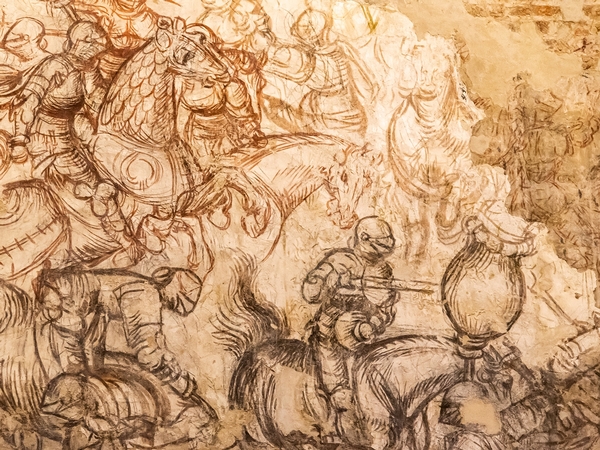
There I stood, bald, sweaty, and scared in the summer of 2017, reciting lines from a book of mandatory knowledge to my cadet squad leader at West Point. “The warrior ethos is: I will always place the mission first. I will never accept defeat. I will never quit. I will never leave a fallen comrade,” I said, correctly. “Pretty good, new cadet, except for one thing. It’s pronounced EETH-OSE.” The poor benighted fellow, I thought. Roger, sergeant! I said, and continued staring straight forward at parade rest.
What have Jerusalem and Athens to do with a long day in the hot sun? Every year, Rockbridge graduates attend service academies or ROTC programs. Certainly, the broad, liberal arts education of which West Point and Annapolis boast can build on a classical foundation, but the joyride through academia must end. Mental energy once directed toward neutron transport equations is spent figuring out how to anchor a tent in a windstorm in the California desert. Instead of opining at length on heady moral controversy, the young officer must explain to his Soldier why he should not have tried to run from the cops when they pulled him over for driving drunk. In an age of relative peace, drone strikes, and Microsoft Office, the Homeric deeds of Joshua Chamberlain or James Doolittle seem utterly inaccessible, weak as men are nowadays.
I’m not writing to advertise the modern armed forces to Rockbridge students. Surely there are other fitting vocations for the young mind steeped in Aristotle and Augustine. Rather, I want to expound the value of classical Christian upbringing for those who are set on a military career.
First, the breadth and depth of classical education is excellent preparation for the wide variety of military duties. Regardless of his ever-changing official position title, a young Army officer must play the Renaissance man in a host of tasks: plan and evaluate tactical training, oversee maintenance on heavy machinery, sniff out and punish misconduct, keep track of millions of dollars’ worth of equipment, and far more. This is not to say that former public school students didn’t have to take a variety of subjects in high school. But classical education continuously integrates various disciplines, emphasizes the value of each discipline beyond making a paycheck, and applies critical thinking and writing skills to each, which better prepares an officer to tackle a variety of problems, all the while sharpening his ability to use present experience to tackle the unknown in the future. He also has many opportunities to apply the basics of grammar, logic, and rhetoric in such common obligations as writing reports, conducting investigations, and briefing superiors.
Second, classical education teaches a tale of culture and civilization that encourages the military officer to look beyond the frustrating mundanity of daily life. I will never break a barbarian stronghold by building a genius second siege-wall, but surely Caesar also spent mind-numbing hours thinking about how to keep his army’s equipment in good condition. The glorious victories of the West are bridged by long, boring periods of standing the watch at home, passing on martial skills to the next generation. Today may be a period of relative inaction, but without millions putting in effort to man the national defenses, they will not function when the action resumes. Where much of education ends with getting a job and doing a job, classical education brings greater purposes into perspective.
Finally, firmly Christian education is an excellent ally for a young man immersed in the sometimes boorish, bureaucratic world of the armed forces. All my friends were avid churchgoers during cadet basic training, when chapel had free cookies and nobody shouting at them. Few live a faithful life when work consumes weekends, success is the supreme moral virtue, equal protection is given to a variety of philosophies, and time off is spent easiest at a club. Yet I’ve also met many strong Christians, most of whom had faithful parents and firmly understood both the truth of Christ and the characteristics of Christian living. Because classical Christian education provides both theological and moral training – and does so earnestly -- it is excellent defense against the double temptation of anti-Christian thinking and coarse living.
Young men, if you want a life of bravery and danger, join an urban police department. If you want to save your country, raise Christian kids. If you want to live in polished luxury, join the Air Force. But if you are committed to serving in the military, you will do well, because you have been brought up well.
A Part of Our Rockbridge DNA: A Reflection on Faculty Morning Prayer
October 10, 2024
As students come into the building each morning, they hear a strange sound echoing throughout the hallways. It's an unfamiliar sound in schools and buildings to be happening at 7:30 in the morning: sometimes louder, sometimes softer, and sometimes a higher or lower pitch. And then it abruptly stops about three minutes later. The sound comes from Mrs. Kennedy's Physics classroom. But the students hear it every day, so they no longer raise their eyebrows and ears to figure out what it is. It's completely normal to them.
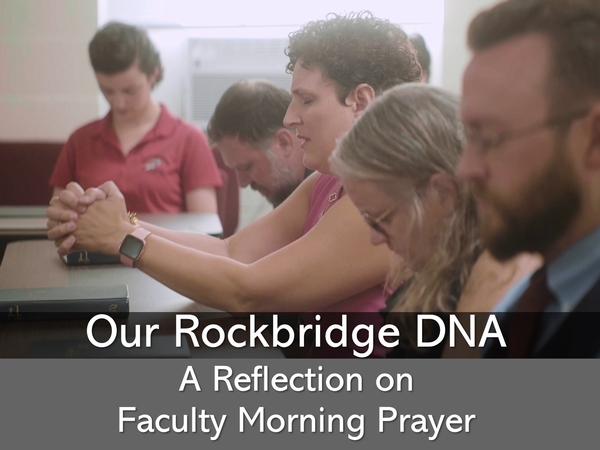
What the students hear each morning is the sound of their teachers singing a hymn a cappella. Since the door is left ajar, the sound travels. From the entrance of the school, you can just make out murmurs set to pitch; as students walk further into the building, the words become more recognizable. School hasn't started yet, so students are unloading book bags and already nibbling away at their lunches, casually hanging out with friends with heels up on their locker doors. To them, hearing adult men and women singing full voice is not strange to them. It's just what their teachers do.
#87: Holy, Holy, Holy, Lord God Almighty! / Early in the morning our song shall rise to thee; / Holy, Holy, Holy, merciful and mighty! / God in three Persons, blessed Trinity!
Each morning the Rockbridge faculty and staff gather together to sing a hymn and pray together for our students, families, and alumni. This is absolutely one of my favorite things we do. Here's how we do it.
When the bell rings at 7:30, someone picks out a number from a blue Trinity Hymnal. We've all picked one up from a bookrack as we've entered, so we're ready. It's a bonus when we're accompanied by a piano or a flute, but we're normally a cappella. Some of us try to sing harmonies—others succeed. And if it’s one of those hymns with the extra verses written beneath the final music staff, we sing all the extras too.
The collection of blue Trinity Hymnals with a solitary gold cross on the front have been gifted to us from various churches as they have updated to the newer red hymnals of the same design. Inside the front cover are stamps of the names of the donating churches. That our hymnals which allow us to sing together do not all come from one church but from several reminds me of the fellowship of families which belong to a myriad of church congregations and denominations but come together to form one Rockbridge. The Trinity Hymnal has been a new hymnal to me, but it has nearly all of my favorites.
#122: O ye heights of heav'n, adore him; / Angel hosts, his praises sing; / All dominions, bow before him, / And extol our God and King.
That our hymnals which allow us to sing together do not all come from one church but from several reminds me of the fellowship of families which belong to a myriad of church congregations and denominations but come together to form one Rockbridge.
After singing, we pray for current Rockbridge families and for alumni, selecting about five or six families each day. There's even a binder labeled "STAFF MORNING PRAYER LIST" to make sure we don't miss anyone, moving alphabetically through a roster of family names throughout the year. If you are an alumni, please know that we still pray for you by name. Your teachers delight in remembering you. For current families, please know that we pray for your entire household by name. As an Upper School teacher, praying for Grammar School students is how I have come to know the students who will one day be in my classroom.
If you are an alumni, please know that we still pray for you by name. Your teachers delight in remembering you.
We also take prayer requests for the faculty and staff for the day. It is here that we have shared in some of the greatest joys in each other's lives while also lamenting the greatest of sorrows. In a way, to pray for someone is to truly know them because it is to properly see them, their joy, or their sorrow in relation to God's ever-present care. Similarly, to be prayed for is to be known. It has meant so much to me on the days when I have asked my colleagues to pray with and for me.
It is here that we have shared in some of the greatest joys in each other's lives while also lamenting the greatest of sorrows.
The hymn, the prayer requests, the fellowship of prayer. This all happens in about ten minutes. And I'm so glad it does. It would be so natural to start the day together but to do so merely for the sake of making announcements and reminders about the day. And while we do sometimes have those, the focus is on preparing our hearts for the people and the learning of that day. As the school begins to be filled with students, it is also filled with prayer asking God to guide, to protect, to nurture our students.
I wanted to know when this rhythm began and how it had evolved, so I went about asking those teachers who were starting school days fifteen, twenty, or twenty-nine (!) years ago. All of them said the same thing: it’s one of those things that everyone remembers doing but doesn’t remember when or how it started. It struck me that singing to God and praying to him are just a part of the DNA of Rockbridge. Just as we don't remember learning to brush our teeth or how to tie a knot, at Rockbridge we sing to God and pray to him because it is part of the fabric of who we are.
#492: Take my voice, and let me sing, / Always, only, for my King. / Take my lips, and let them be / Filled with messages from thee.
It struck me that singing to God and praying to him are just a part of the DNA of Rockbridge. Just as we don't remember learning to brush our teeth or how to tie a knot, at Rockbridge we sing to God and pray to him because it is part of the fabric of who we are.
Posted in
School Culture
The Birth and Development of a Rockbridge Tradition
January 15, 2020
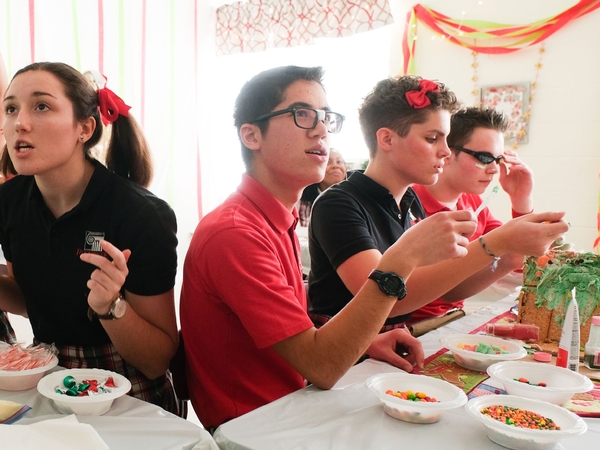
Chairs clatter, students squeal, rooms empty, and break looms. No it’s not the last day before summer vacation, but Rockbridge’s annual Captain’s Cup decorating competition, one of the most hectic days of the year. In a matter of hours, classrooms are stripped down and transformed into ornate displays of “Christmas” scenes, all for that coveted lunch (take-out from the restaurant of their choice) paid for by the school’s administration, not to mention the trophy.
Rockbridge has traditionally held its Captain’s Cup on the final day before Christmas break as a way to not only celebrate the holiday season, but also to promote community and fellowship among its students, teachers, and alumni.
The very first Captain’s cup took place in 2006 and was coordinated by then upper school principal Ralph Janikowsky. “By the time of the Christmas break, everyone was exhausted and no one was having any fun,” Janikowsky explained. “We decided to start the Captain’s Cup to encourage class camaraderie, prepare our hearts for Christmas, to provide some team building and leadership opportunities, and to let our students be creative and enjoy that last day.”
In its purist form, Captain’s Cup is a classroom decorating competition between upper school homerooms. For weeks, students plot, scheme, and vie for the best idea, one that will undoubtedly set their class apart as the best. In the end, decorations are brought in, actors are chosen, and a few lunch periods are lost in the process, but it’s all worth it once the finished product is presented. Ideally, each room will have tie-in to the holiday season, but as history has shown, this is only a tangential requirement.
According to former administrative representative Ellen Wallen, Mr. Janikowsky may have found inspiration for Captain’s Cup in a small scale Christmas door decorating competition which had already occurred between classrooms prior to 2006.
Janikowsky instituted and popularized the competition during his second year at the school, but what took place early on was not exactly the same Captain’s Cup we’ve grown to appreciate today. According to rhetoric literature teacher Monica Godfrey (who was a sophomore at the school in 2006), the event took time to develop and mature. She explained that in the early years, decorations were not as elaborate, likening it to those doorway competitions which preceeded Captain’s Cup.
“The expectations were a lot different then,” she said. “No one really transformed their rooms, so you could still tell you were in a school. Over the years things morphed as people became more creative and committed to setting themselves apart.”
She also explained that originally there were no actors in the rooms, and due to the small size of the school, teachers judged the rooms rather than alumni. Mrs. Wallen noted that she, along with Mrs. Davis and Mr. McKenna, were the first to hold this honor.
As the years advanced, Captain’s Cup continued to progress. The name “Captain’s Cup” was not even utilized until much later on, referencing Mr. Janikowsky’s experience in the Navy. Additionally, starting in 2011 the school opted to let the alumni play a key role in the event as judges, an element that remains to this day (per Mrs. Wallen and Mr. Keehner).
Former upper school principal Jerry Keehner stated that this choice continues to produce one of the best alumni events the school holds. “We love seeing them, and work hard to keep up that relationship,” he explained.
Class of ’15 alumna Caitlin Flanagan voiced her appreciation for this particular opportunity, “Returning to Rockbridge for Captain's Cup, especially because my family moved, is my only real opportunity to return to the halls and community that shaped me so much and for which I am so grateful,” she said. “A lot of my friends in college never return to their high schools, but I really treasure the time to see some of my old teachers and catch up with friends who I haven't seen in so long and wouldn't necessarily see during my time in Maryland otherwise. As long as I am in the area at that time of year, I really hope to be able to at least stop by, walk through those tiny little hallways, and thank God for four beautiful years there.”
In the past, we have had over sixty-five alumni participate in the festivities. As judges, the alumni are told to review each room and rank their three favorites. Once their ballots are all collected, Mr. Keehner tallies the scores and announces a winner.