Rockbridge Academy Blog
Posts Tagged "college"
Living out Faith on and off the Field
March 19, 2026
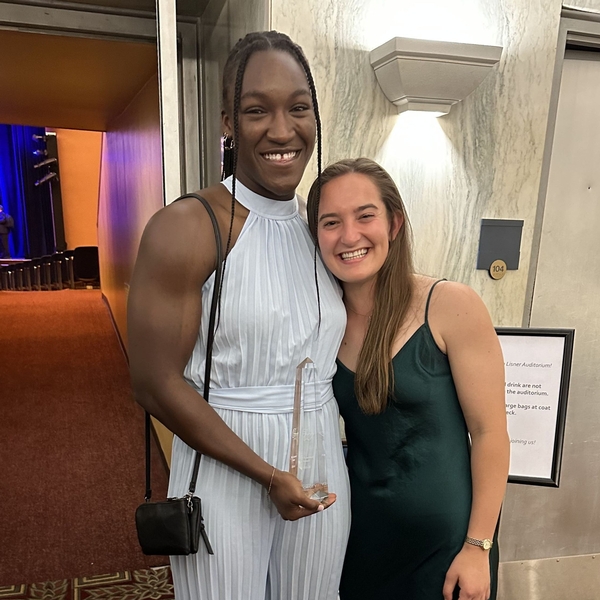
What was your mindset going into college sports? How did it change over your 4 years as you grew in your relationship with God?
Emma: My mindset coming into college was completely wonky. My identity as a person was in how good I thought I was as a lacrosse player. But God really used lacrosse powerfully- through riding the bench throughout my career, to change my heart and shift where my identity was, out of my performance and accolades, and into Christ. My playing time didn’t ever really pan out the way I wanted it do, but I learned some incredibly valuable lessons: what perseverance and endurance looked like, how to have joy despite my circumstances, what success really was, and how to work my very hardest solely for God’s glory even when that wasn’t being recognized by others.
Mayowa: My mindset coming into college was to just be competitive. I was very excited to get to play at the next level and really see what I was made of. And honestly, I don’t think my mindset changed over the four years. I think there was just a pivot of perspective that I felt like the way to honor God through sport was to continue try and tap into untouched potential and to keep trying to grow. I felt like God blessed me with athletic talents, and my way to be fruitful with them was to just keep working hard and keep trying to improve.
How do you live for God on the field? What does that look like? What was the development of that?
Emma: One of my breakthrough moments came at a Fellowship of Christian Athletes Huddle. We had Riley Tanner, professional women’s soccer player, speaking that night. I had been wrestling with how to glorify God on the field and what that looked like. I asked her, What do you think about on the field? How are you taking ‘every thought captive’ as you play?” Her answer changed everything. She said something like, “When I am on the field, I honestly don’t think about anything. I know that I’ve put in probably thousands hours, so the muscle memory is there. I just play. I clear my mind. My way to glorify God on the field is to go 1000% whenever I play, whether I succeed or fail- to give my body as a living sacrifice.” That was hugely impactful for me because it instantly reframed what success was for me. Success was no longer dependent on how many goals I scored or how much time I played- the outcome, instead it was dependent on my effort and mindset- the process. I could give everything I had in a game or practice and I could cheer my head off on the sideline.
Mayowa: I think one of the ways that I lived for God on the court was to have sportsmanship. I think that when you start playing high-level sports you’re taught to “kill your competition”, etc. I felt like that never resonated with me. I enjoyed myself the most when my competitor was also playing very well and we could challenge each other in that way. And then I learned at an FCA huddle that the word compete literally means to strive together, and I think that’s when it all clicked for me. I think sometimes there’s a misconception that you can’t glorify God and also be highly competitive. But it’s as simple as helping somebody up after they fall while also trying to win, I think both can still exist. I think that’s how I lived for God on the court.
How do you balance living for God in and off the field?
Emma: Two parts to this question. First, when I first got to college, I set boundaries for activities I was going to participate in and those I was not (with my teammates). That helped me to still have fun, but to stay true to who I was and the kind of example I wanted to set as a Christian for my teammates. Second, in the sense of 1 Cor. 10:31, “Whatever you do, do it all for the glory of God”, in my experience, living for God on the field has been easier to do because practice was a specific 3 hours when all I had focus on was doing my very best to glorify God. It was much easier to compartmentalize, to stay disciplined, and keep those negative or unhelpful thoughts away. In real life, post college, and at work, like Mayowa said, it’s still something I’m very much still working on. I don’t have a certain amount of hours solely dedicated to one thing. I don’t have to be up at 6am to get to practice. Things look different, I work a 9-5, so it’s been an adjustment of figuring out to translate that into normal life.
Mayowa: I think this is something I am still work on this day. Sometimes it’s hard to realize just how much time I dedicated to sports versus my faith. I think it has to be a very intentional practice of setting aside time to spend time with God and it’s gonna look different for everyone, but I think that’s the best way to balance living for God on and off the court. I think it also becomes easier once you surround yourself with like-minded people. So I loved my time in FCA as a student athlete. I think making sure I was going to weekly huddles really helped me balance living for God on and off the court.
What was it liking going from a Rockbridge environment to George Washington University?
Mayowa: I mean, Rockbridge and GW are vastly different, but I was very excited for it. I think a lot of our time at Rockbridge is spent learning how to have discussions, and coming to GW I was excited to put that to the test, especially with people that had different world views with me. I was also excited to be a student athlete and be surrounded by other young adults that were driven to play at a high level. I think at first after the initial excitement of a new environment, it it felt a little out of place till I found my people, but that’s typically how it goes anyways.
Emma: Yeah, it was definitely different. I was excited to get there, make friends and play lacrosse. I walked into college with the normal uncertainties and fears of what my life would look like, who my friends would be, and all those normal doubts. But, on the flip side, I also walked in with a strong biblical foundation which proved very helpful. More than that though, I got to college confident in my faith, my values, and in my ability to think critically, lead, and work hard, which was invaluable.
Looking back, what was the biggest lesson you learned playing college sports that you apply now?
Mayowa: I think the biggest lesson that I learned playing college sports that I still apply now and honestly, I think is just a general life lesson, is that you have to find ways to keep going and you have to keep showing up for yourself and for others around you.
Emma: I’m not perfect at this still, but the absolute biggest lesson I learned through playing college sports is that God is the only thing that can satisfy and fill that hole in your heart. Make sure your identity is in Christ, because in Christ, there is stability, and there is joy that is not dependent on circumstances. No amount of playing time will ever be enough, no job, title, or whatever will be enough. Only God!
What would you tell a Christian Athletes looking to play sports in college?
Mayowa: I would tell them that it is the experience of a lifetime. It comes with extreme highs and extreme lows, but there’s truly nothing like it. I would tell them to try to find an FCA huddle or an in Intervarsity group. I think my FCA huddle really enriched my time as a Christian athlete at and it has blessed me with friends and mentors that I still have in my life after graduation.
Emma: I would tell them to find a sustainable definition of success. As much I absolutely loved playing lacrosse in college and wouldn’t change anything, there were highs and lows. You will inevitably face disappointment. On the flip side, there will be incredible moments. If your success and joy is defined by the outcome of those moments, you will be riding an emotional roller coaster. One day you’ll be riding high, the next you’ll be miserable. Remind yourself that you are already successful because you are loved unconditionally by God. You’ve already won. Carry that confidence and freedom with you and you’ll play light as feather.
Mayowa Taiwo graduated from Rockbridge Academy in 2018, and studied Civil and Environmental engineering at George Washington University in DC. Here, Mayowa expanded her athletic career from Rockbridge Academy's Basketball team to George Washington's D1 Basketball team, carrying her passion over as a student athlete. She graduated with a B.S. in Civil and Environmental Engineering in 2023 and completed her masters in Engineering Management a year later at her Alma Mater. Mayowa has been working as a Project Engineer in DC and Northern Virginia in the construction industry (Moriarity and Associates) since September of last year.
Emma McLaughlin graduated from Rockbridge Academy in 2021. She also studied at George Washington University, majoring in Political Science while also pursuing competitive athletics. As a student athlete, Emma was able to build onto her career in college, translating her love of Lacrosse from Rockbridge Academy's team to George Washington's D1 team. She graduated in 2025 with a Degree in Political Science and with Minors in International Affairs and Human Services. Starting in November of last year, Emma has been working as the Staff Assistant in the U.S. House of Representatives for the House Judiciary Committee.
Faith in Action: Following Christ After College
May 19, 2025
.JPG)
For the past nine months, I have been learning what it looks like to live as a Christian after college. I participated in the Capital Fellows Program at McLean Presbyterian Church in Northern Virginia. It is a leadership and discipleship program for recent college graduates, focusing on vocation, community, service, and leadership. In this article, I hope to share with you some of what I learned during this year of living out faith and work.
"When he had washed their feet and put on his outer garments and resumed his place, he said to them, 'Do you understand what I have done to you? You call me Teacher and Lord, and you are right, for so I am. If I then, your Lord and Teacher, have washed your feet, you also ought to wash one another's feet. For I have given you an example, that you also should do just as I have done to you.'" John 13:12-15.
There I was, at church like I was every Monday evening, surrounded by my 12 peers. Our program director, John Kyle, also sat in the room and had just read us this passage from John 13. We were talking about leading like Jesus. Familiar with this passage where Jesus washes his disciple's feet, I thought I knew where he was going. And in some ways, I was correct. In order to lead like Jesus, we need to serve one another. We spoke often of this throughout the duration of the Capital Fellows program. Christian leadership requires serving others out of a Chirstlike love for them and the knowledge of their dignity as fellow image bearers.
What I didn't see coming though, was what happened next. John Kyle's wife opened the door and pushed a cart full of pitchers with warm water, empty basins, and folded white towels into the room. John Kyle grinned and said, "Now we are going to give you all the opportunity to literally wash one another's feet." We all looked around, and slowly moved towards the cart full of supplies. I had grown to love these people over the last seven months, but washing their feet still seemed uncomfortable. The idea of serving them was super easy in my head, but when it came time to actually wash their feet and have my feet washed, I was hesitant. However, the evening turned into a sweet hour of washing feet and prayer. I never would have expected this.
I share this story with my Rockbridge community not to encourage you to go get a pitcher and literally wash feet (though I guess that worked for me). I share it more so as a reminder that serving like Christ requires action. At Rockbridge, we learn about taking every thought captive in obedience to Christ. However, we must not stop there. In our learning we take every thought captive to obey Christ, and in our living we must take everything as an opportunity to lead and serve like him.
Throughout the program, fellows work a paid internship in their field of choice, take seminary classes, serve in the community and in church, read through the entire bible, have group discussions on various topics, receive Christian career mentorship, and live with host families. Instead of just talking about how to live a Christian life after college, this year gave me the opportunity to do it.
Throughout the program, fellows work a paid internship in their field of choice, take seminary classes, serve in the community and in church, read through the entire bible, have group discussions on various topics, receive Christian career mentorship, and live with host families. Instead of just talking about how to live a Christian life after college, this year gave me the opportunity to do it. Yet I learned that "doing it," putting faith in action, is impossible without Christ.
With all that this year required, at times I lost sight of Jesus. During those times, my joy for my work came and went, my eagerness to be in community lessened, my desire to serve dwindled, and my leadership suffered. Even though they brought hardship, I am thankful for those moments. Through them I realized that without Jesus, every aspect of life loses its meaning! I need Him. We all do. I often thought of Galatians 2:20 this year. It says, "I have been crucified with Christ. It is no longer I who live, but Christ who lives in me. And the life I now live in the flesh I live by faith in the Son of God, who loved me and gave himself for me." As a Christian I am not the one living. It is Christ that lives in me. He loved me and gave himself for me. So I live my Christian life by faith in his work in me and through me.
Capital Fellows was not the first place that I learned about living life as a Christian. Rockbridge laid the foundation. I remember singing the Alma Mater at the beginning and end of each school year. Asking God to be in my head, eyes, mouth, and heart. I was often reminded that the work I was doing was not for myself, because God was the one working through my head, heart, and hands. Rockbridge is full of hard-working students and parents that love Jesus and live out their faith in a way that honors God. However, in the hustle and bustle of school, it is easy to lose sight of the Savior, even though he is the one that is living in us!
The Capital Fellows program gave me more intentional opportunities to practice putting my faith in action, pointing me to Jesus. This practice is something I will need for my whole life. When we fix our eyes on Jesus, the founder and perfecter of our faith, we will live out opportunities to live and serve like Him. Because of Jesus, we have joyful purpose in work, have eyes to see the dignity of others in community, have hearts with zeal to serve, and have guidance and wisdom in leadership in all stages of life.
If you are interested in hearing more about Capital Fellows, feel free to contact Sarah Williams (sarahkwilliams17@gmail.com). For more information and to apply, click this link: https://www.capitalfellows.org/apply
Sarah Williams (Rockbridge Academy Class of 2020) graduated from Clemson University in May 2024, completed Capital Fellows this year, and she will be starting graduate school at George Washington University in August for occupational therapy.
Trusting God with College Plans
April 28, 2022
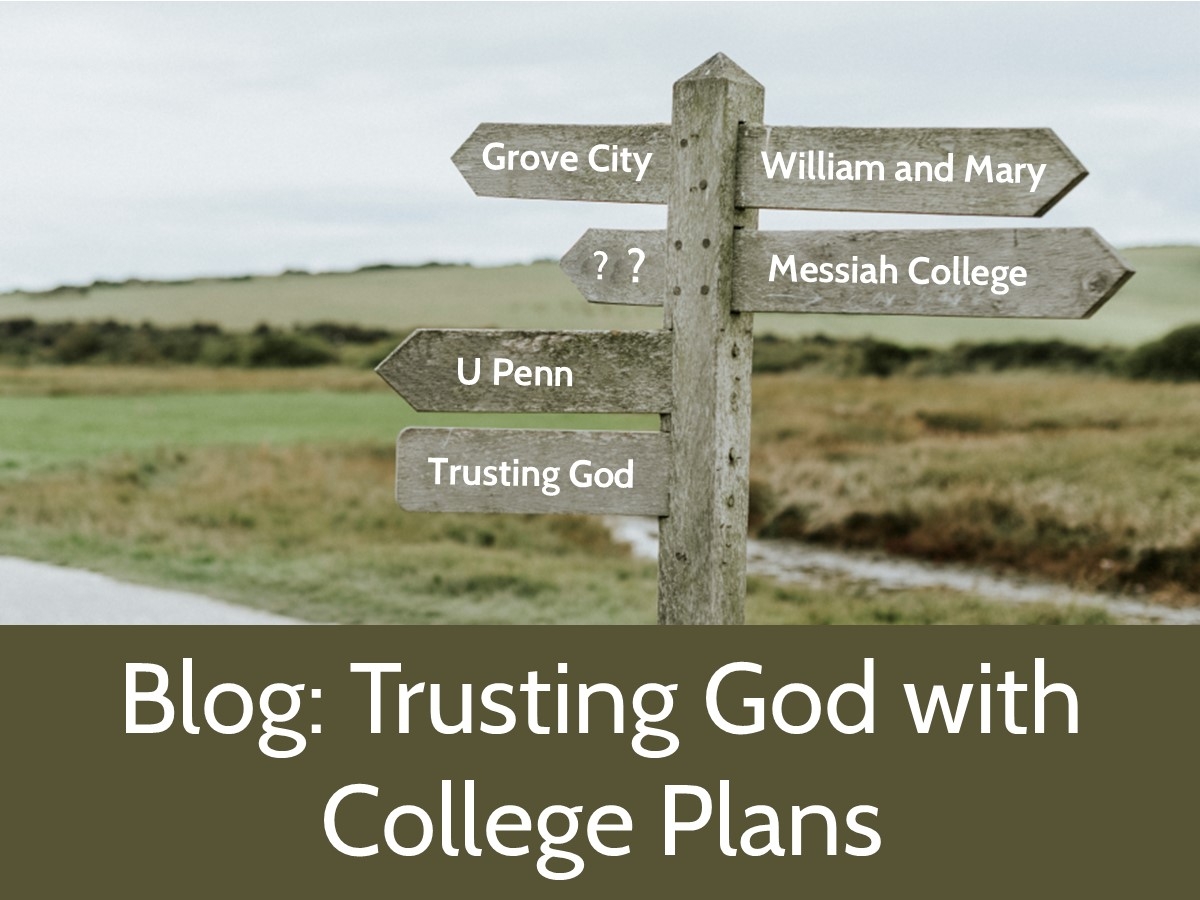
In the fall of 2019, I danced through the halls of Rockbridge with a head held high and a smile secured, for I regarded myself as the early bird who had “gotten the worm.” Before senior year started, I ordered my path for the next season of my life. I applied to the College of William and Mary to study English in W&M’s Joint Degree Programme with the University of St. Andrews; I was accepted and ready to attend before the new year. Even Covid-19, when it came, could not diminish my eagerness for my neatly-crafted plan.
A Zoom bible study early in the pandemic directed my attention to Proverbs 16, particularly verse 9: “The mind of man plans his way, but the Lord directs his steps.” While I nodded along to my peers’ reflections regarding the Lord’s sovereignty despite the virus’s disintegration of man’s plans, my heart stood secure against the truth of the proverb. Blessed, as I was, with rich resources of fellowship and support through my family and the Rockbridge community, I felt little of the pandemic’s mutilation until I left for school.
My first semester revealed not only the virus’s disintegrating effect but also my own pride in planning. By my calculations, if I could only attend a prestigious school, participate in an international program, and do so while achieving good grades and making good connections, I would arrive at a state of accomplished contentment. My efforts, I imagined, would yield happiness.
I completed my supposed prerequisites. Still, my desired result–satisfaction in my work as a student, as well as contentment and spiritual peace in my everyday life–evaded me. When I worked harder, I felt even more discontent.
Upon return after my first semester, the truths I had attempted to scurry away from found me out through various unexpected pathways, such as subbing for my mother’s fifth grade class and working in children’s ministry at my church. Simple truths that I taught to children–including verses like “The Lord is my shepherd: I shall not want” and ideas like “God is in control” and even “Jesus loves me, this I know”–riddled my sense of self-sovereignty.
Over the course of several months, I learned to listen to the Lord as he led me “in paths of righteousness for his name’s sake.” Such listening prodded me to consider that perhaps I, with my perfectly-ordered path towards success, could be mistaken.
Our culture feeds us the notion that mastery over one’s own plans is inherently good. Such self-actualization sates the human hunger to declare oneself “master of my fate, captain of my soul”–a hunger that has been grumbling since Adam and Eve tasted the bitterness of sin. Yet the myth of self-actualization cannot provide sustenance for life or satisfy the soul.
As Augustine wrote in The Confessions, addressing God, “Thou hast formed us for Thyself, and our hearts are restless till they find rest in Thee.” In finding my sustenance and rest in the Lord’s plans rather than my own, I released my schema of prestige and international opportunities and began the process of transferring schools.
Contrary to the notions of our culture, the Lord provided a place for me, as he provides for the birds of the air and the lilies of the field. In the end, I am not, after all, that triumphant early bird with his self-selected worm but a bird fed by my Father.
Submission to the Lord’s rod and staff must not be a singular stance but a daily posture.
C. S. Lewis famously wrote that “relying on God has to begin all over again each day as if nothing had yet been done.” Since transferring to Grove City College last year, I have often reminded myself that submission to the Lord’s rod and staff must not be a singular stance but a daily posture. Surrender, especially of a seemingly-satisfactory schema for success, requires faithful practice, but the Lord has rewarded my surrender, opening further unexpected pathways before me.
The Valley of Vision contains a prayer I often return to during this practice of surrender: “I rejoice to think that all things are at thy disposal, and I love to leave them there. Then prayer turns wholly into praise, and all I can do is to adore and love thee.” May we indeed rejoice as we release our plans into the Father’s hands.
Sarah Soltis (class of 2020) is studying English and classical studies at Grove City College. She writes for GCC's newspaper, The Collegian, and the cultural magazine, Cogitare Magazine. Sarah works as an editorial intern for the online and print magazine Front Porch Republic, and she has contributed to Front Porch Republic, as well as The American Conservative and several online literary magazines. This summer, Sarah will be working at The Trinity Forum, a D.C.-based non-profit focused on cultivating Christian thought on faith and culture.
Posted in
Upper School